

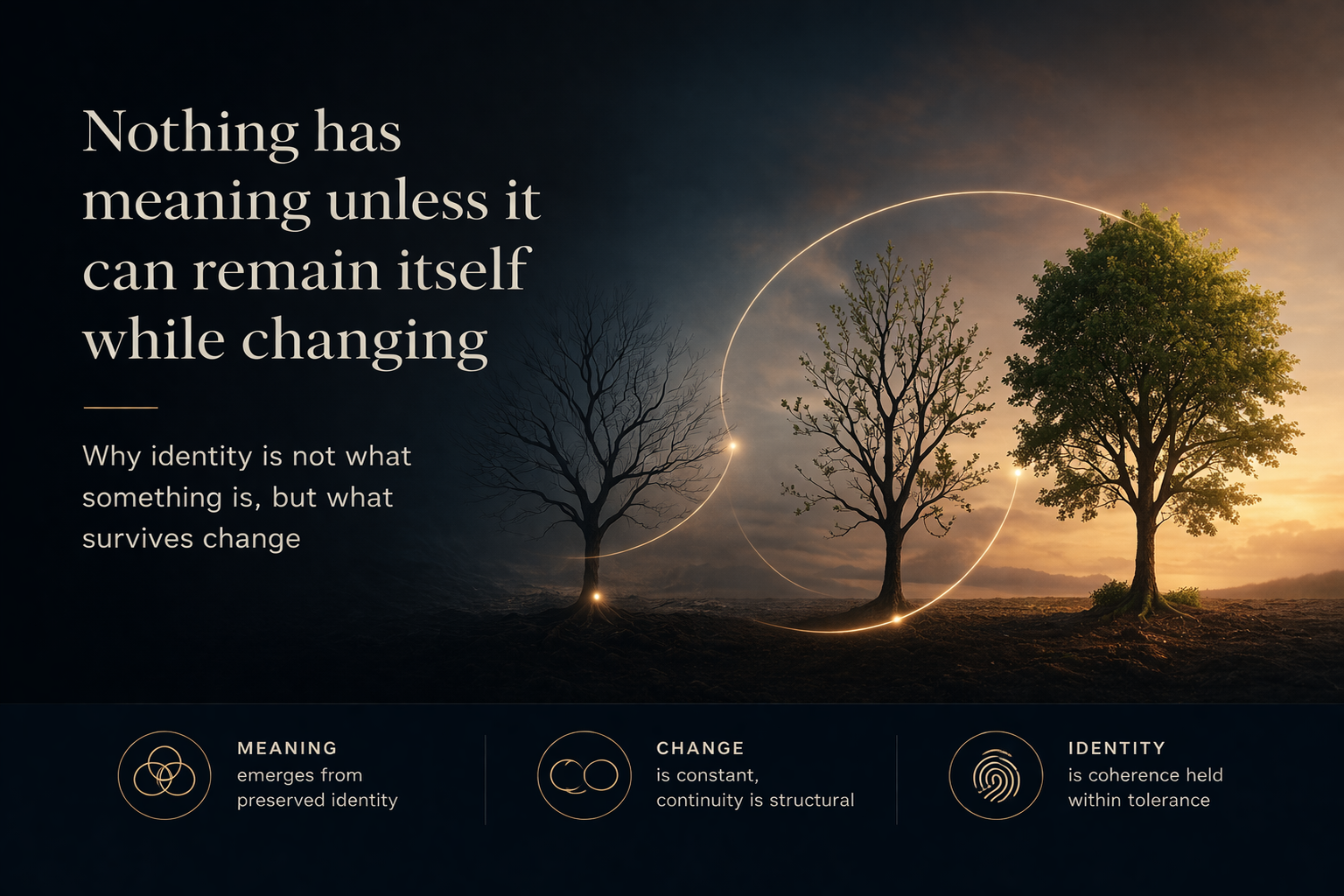
We treat identity as something that stays the same — but nothing we call ‘the same’ ever actually does. We usually think meaning is something we give to things. But that skips a more fundamental question: What makes something capable of having meaning at all? Everything changes. Continuously. Objects wear down. Organisms develop. Ideas evolve. You are not the same person you were a year ago. And yet — we still recognise things as the same. That’s the real puzzle. Because if something changed completely, without any continuity, we wouldn’t recognise it anymore. And if we can’t recognise something, we can’t assign meaning to it. So meaning doesn’t start with interpretation. It starts earlier. Much earlier. It starts with identity. The hidden condition of meaning For something to have meaning, it must be able to persist through change while remaining identifiable as the same thing. Not perfectly the same. Not unchanged. But structurally continuous. If that continuity breaks, something deeper happens than “change”. The identity is gone. And with it, meaning disappears. Meaning is not added — it emerges We often treat meaning as something we project: in psychology → interpretation in language → symbols in AI → representations But all of these assume something more basic: that there is something stable enough to interpret. If there is no continuity, there is nothing to attach meaning to. So meaning is not something we add to reality. It is what appears when something remains identifiable while it changes. The structural condition This requires a very specific condition. Not a mechanism. Not a model. But a structural requirement. The Bellori Framework specifies identity not as a property of a state, but as a structural condition of a sequence of states, in which the coherence between successive configurations is preserved within tolerance limits of change. It does not describe mechanisms or provide a model, but defines the structural condition under which a system can remain identifiable as the same system under change. This shifts everything. Identity is not what something is. It is what holds together across change . Why this matters (more than it seems) This isn’t abstract. It shows up everywhere. A human Without continuity of identity → no self A living system Without preserved coherence → no organism An AI model Without structural continuity → no stable behaviour In every domain, the same boundary appears: 👉 No coherence → no identity 👉 No identity → no meaning A different way to see reality We don’t live in a world of static things. We live in a world of ongoing change where only some patterns remain coherent enough to be recognised as the same. Those patterns are what we call systems. Those systems are what we experience as real. And their persistence is what makes meaning possible. Final thought Meaning is not something we assign to the world. It is what becomes possible when something survives its own transformation. Meaning exists where identity holds under change. If this resonates, you may want to explore further: Why consciousness is not an added layer, but a functional consequence of the same structure
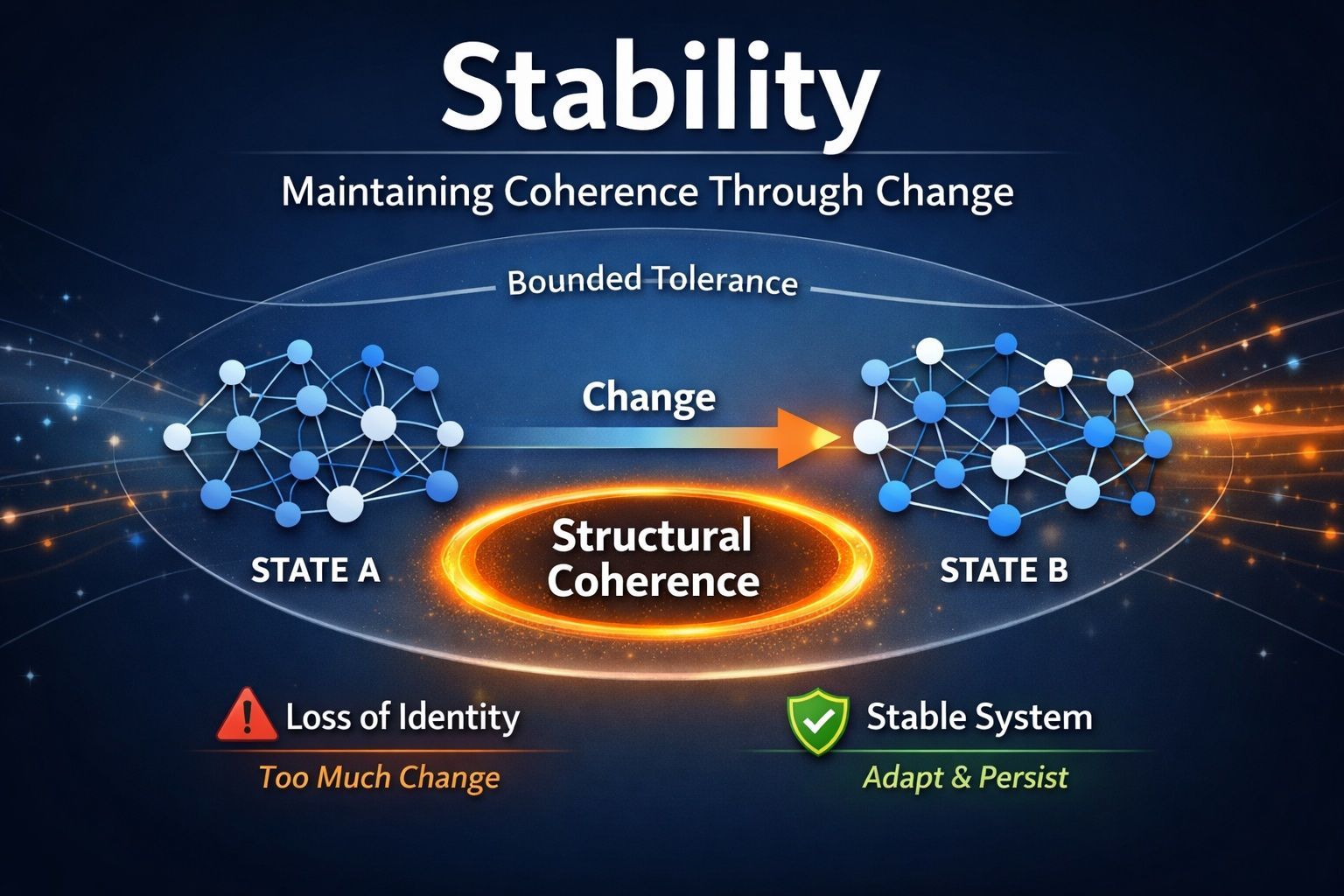
A domain-independent framework defining stability as bounded coherence, explaining how persistent identity and meaning emerge from change.
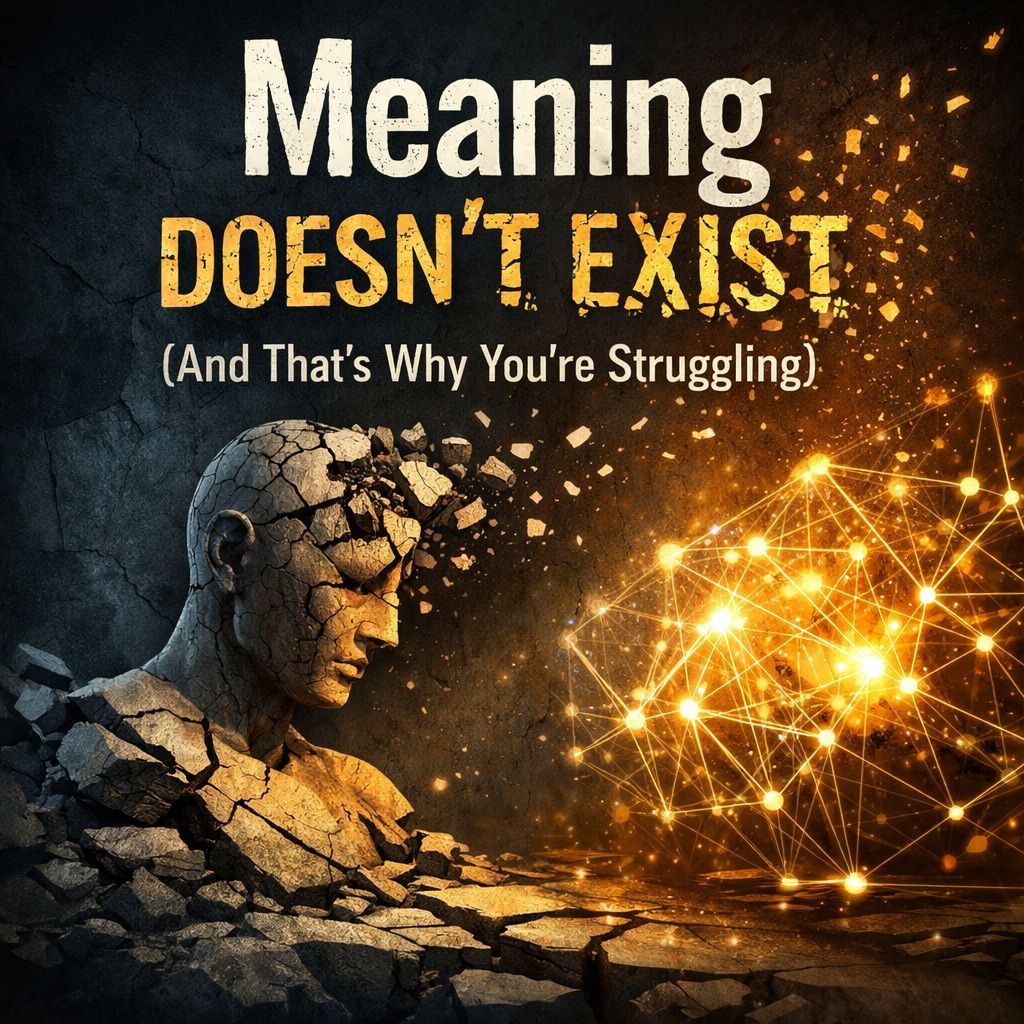
Most people think meaning is something you find. It isn’t. Meaning only appears when your life holds together under change. This article explains why meaning disappears — and how it actually emerges.
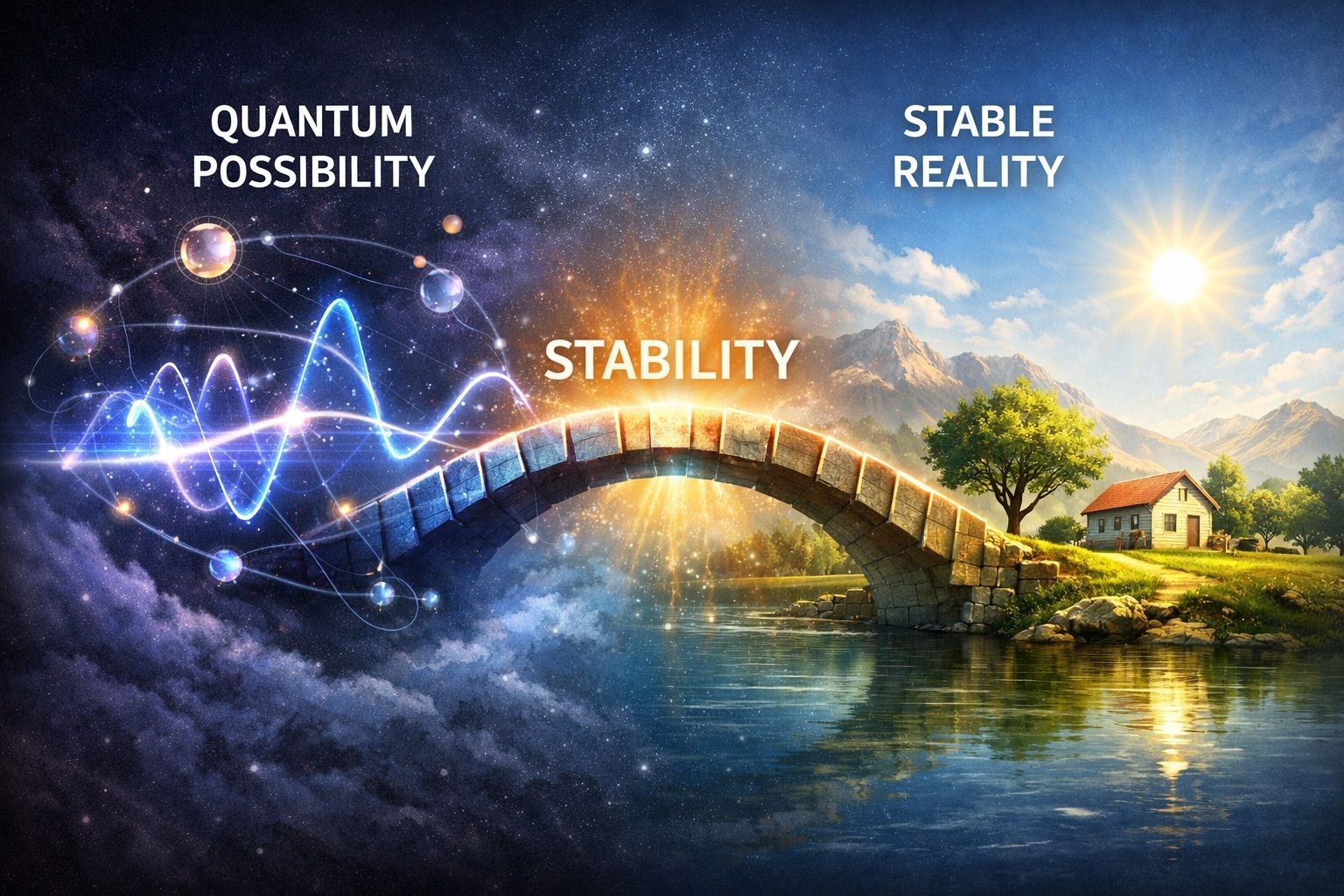
Why Quantum Theory and Reality Never Quite Matched
Scientists built the most precise atomic clock ever. But what are we really measuring: time itself, or simply physical change?
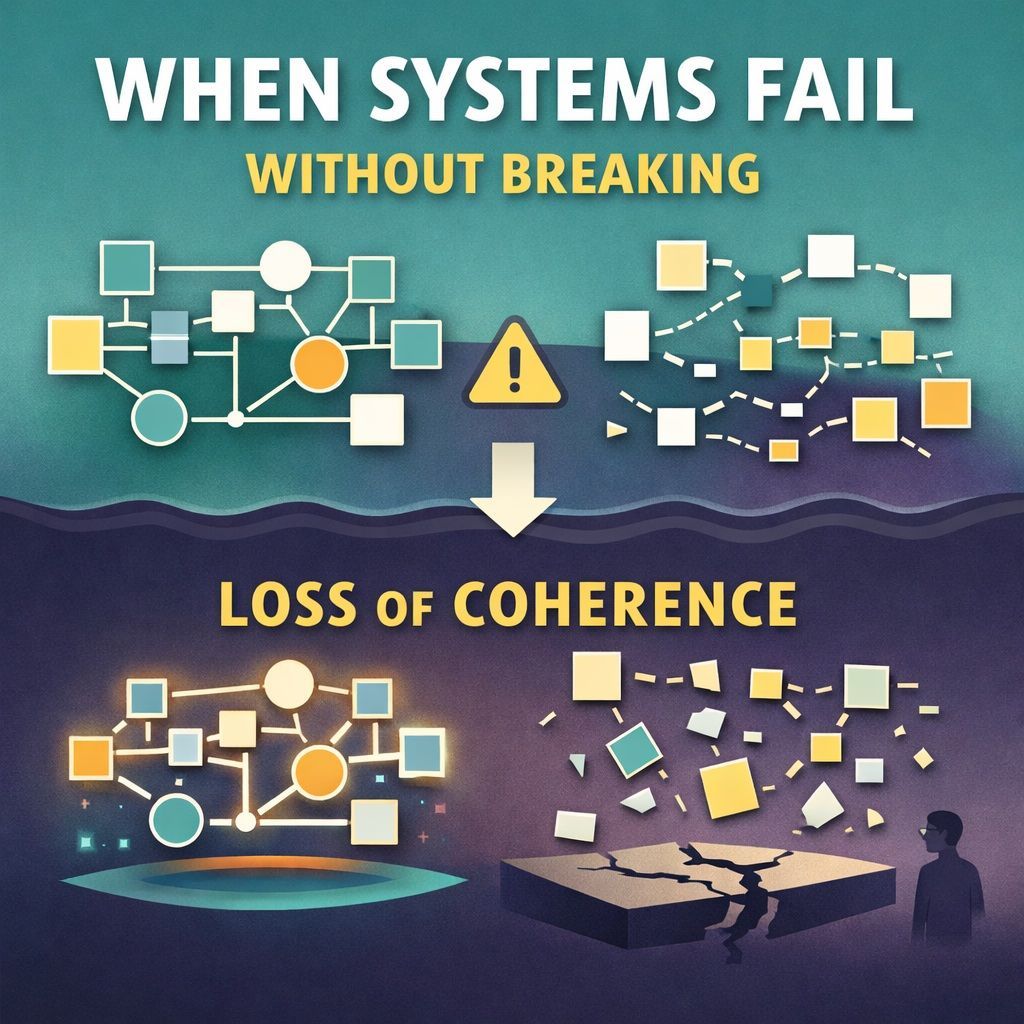
Complex systems often fail without any component breaking. Structural identity theory explains how systems lose coherence while still running.

Meaning does not come from purpose or belief. It appears when identity remains coherent while the world changes around it.

What allows something to remain the same while it changes? A structural perspective on identity, coherence and resilience.
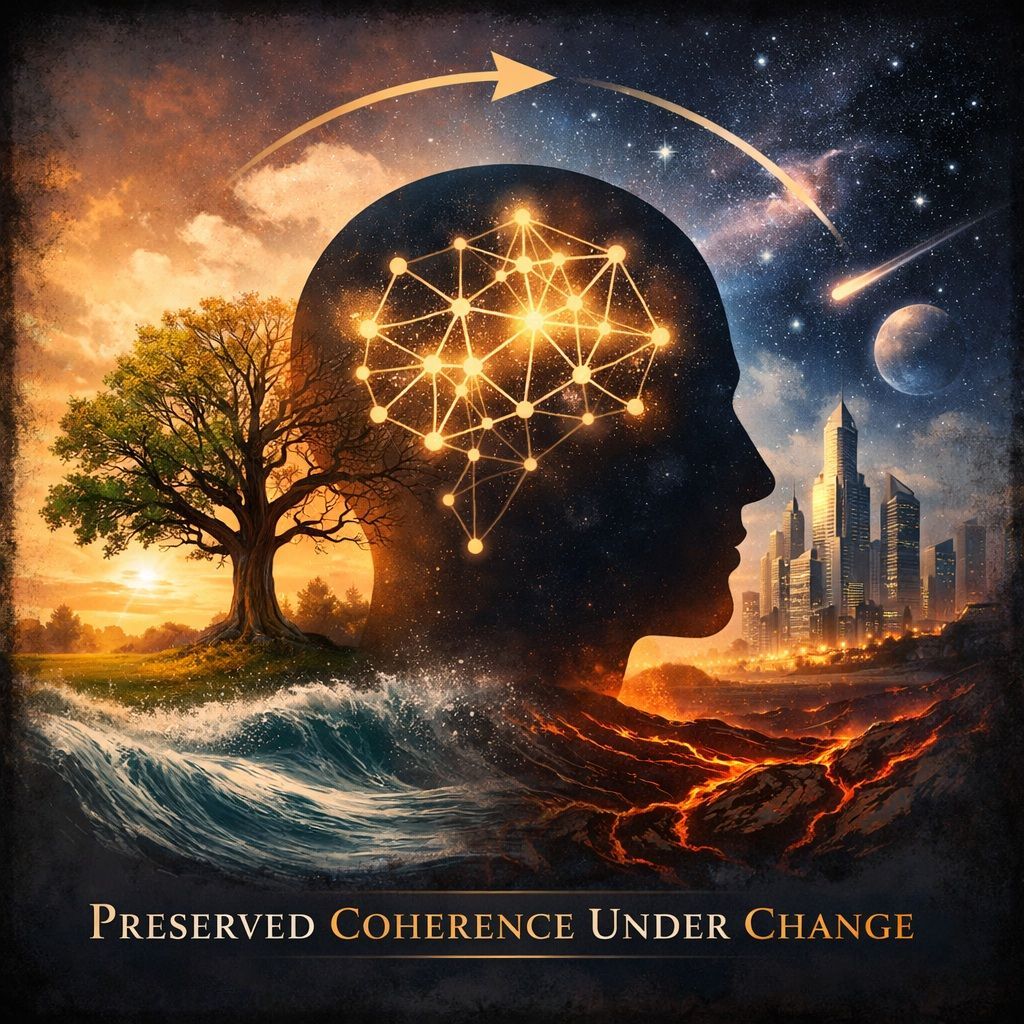
For a long time, I thought identity was something you discover. A stable core beneath change. Something stable. Something underneath. A core that remains the same while everything else shifts around it. That idea is everywhere. In psychology. In philosophy. In everyday conversations. We speak about “finding yourself” as if there is a finished version of you waiting somewhere behind your habits, your history, your roles. Yet the more I looked at change — in people, in systems, in life itself — the less convincing that picture became. Everything changes. Constantly. Bodies change. Beliefs change. Relationships change. Cells regenerate. Context shifts. Even what we remember about our past reshapes itself over time. If identity were a fixed core, it would either have to resist all of that or exist outside of it. Neither option matches lived experience. What intrigued me was something much simpler. Despite constant change, we still recognise sameness. You remain you, even though you are not identical to who you were ten years ago. A friendship remains the same friendship even though conversations, circumstances and phases evolve. A melody remains the same melody even when played faster, softer or in another key. Something holds. That “holding” became the focus of my work. The question that shifted everything At some point I stopped asking: What is identity? And started asking: What allows something to remain the same while it changes? That shift sounds small. It isn’t. Instead of looking for a hidden essence, I began looking for structure. Not structure in the sense of rigid form, but in the sense of coherence — elements that continue to belong together across variation. Coherence simply means that parts relate to one another in a way that still makes sense when conditions shift. When coherence is preserved, we speak of identity. When coherence collapses, we experience loss, fragmentation or transformation. This perspective applies far beyond personal psychology. It appears in biology, in physics, in social systems, in technology. Wherever something remains recognisable across change, coherence is doing the work. Identity as preserved coherence under change Over time I formulated this more precisely: Identity is preserved coherence under change . Let me unpack that in plain terms. Change is inevitable. Every system moves from one state to another. Coherence refers to the internal consistency that keeps elements connected. Preserved means that despite variation, the pattern holds within certain limits. Those limits matter. Every identity has tolerances — a range within which change can occur without dissolving the whole. A bridge can carry weight up to a certain point. A nervous system can integrate stimulation up to a certain intensity. A person can adapt to life events within certain boundaries. Beyond those tolerances, identity reorganises. This way of thinking removes the need for a mysterious core. Identity becomes dynamic rather than static. It lives in the way change is absorbed. Why this matters personally When people speak about an identity crisis, they often describe feeling lost or fragmented. From a coherence perspective, that experience makes sense. It signals that change is exceeding the tolerances of the current structure. Meaning, confidence and stability weaken when coherence weakens. At the same time, growth requires expansion of coherence. Remaining exactly the same eventually narrows the capacity to integrate new experience. Stability alone is insufficient for long-term resilience. That insight reshaped how I think about mental health, learning, creativity and even the search for life beyond Earth. In every domain, the same structural question appears: How much change can be integrated while remaining recognisably the same? A different way of recognising yourself This view also alters how I understand personal identity. Instead of asking, “Who am I really?”, I find it more fruitful to ask: What patterns in me remain coherent across change? My interests have evolved. My vocabulary has deepened. My understanding has matured. Yet certain structural tendencies — the way I look for underlying principles, the way I connect domains — remain recognisable. That continuity does not come from a hidden essence. It comes from coherence. And coherence is something that can strengthen, weaken or reorganise. Identity is everywhere Once you start seeing identity as preserved coherence, it becomes difficult to unsee. A living cell maintains biochemical coherence while exchanging matter with its environment. A conversation maintains coherence while words flow and contexts shift. A culture maintains coherence while generations reinterpret traditions. Identity is not rare. It is the condition that allows anything to remain meaningful across time. Which brings me to a final thought. Meaning itself depends on identity . A word has meaning because it remains recognisable across different uses. A relationship has meaning because it remains coherent across shared experiences. Without preserved coherence, there is no stable reference point for significance. Everything that has meaning depends on identity. Where this leads In the coming period I will explore how this structural view of identity reshapes our understanding of consciousness, mental health, resilience, time and even life itself. For now, I invite you to try something simple. The next time you notice change — in yourself, in a relationship, in a situation — instead of asking whether something has been lost, ask: Is coherence still holding? If it is, identity remains alive. And if it begins to stretch, that does not necessarily signal failure. It may signal growth, or the need to reorganise. Identity, as I have come to understand it, is not a fixed answer waiting to be discovered. Identity is not found. It is maintained. It is the ongoing work of holding together while the world moves.

What happens when you discover autism later in life? An exploration of late diagnosis, masking, identity, relief and grief through lived experience and structural identity.