

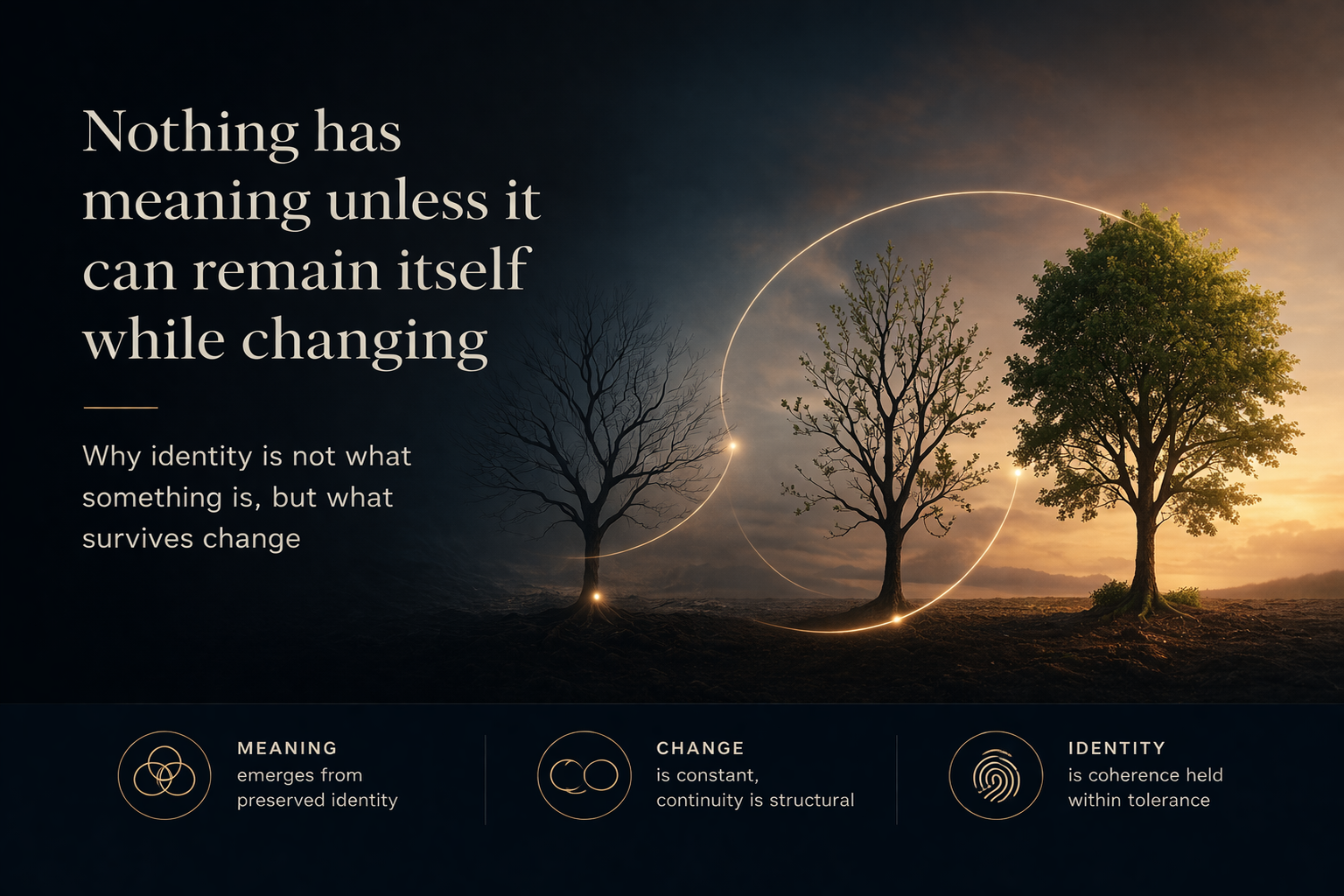
We treat identity as something that stays the same — but nothing we call ‘the same’ ever actually does. We usually think meaning is something we give to things. But that skips a more fundamental question: What makes something capable of having meaning at all? Everything changes. Continuously. Objects wear down. Organisms develop. Ideas evolve. You are not the same person you were a year ago. And yet — we still recognise things as the same. That’s the real puzzle. Because if something changed completely, without any continuity, we wouldn’t recognise it anymore. And if we can’t recognise something, we can’t assign meaning to it. So meaning doesn’t start with interpretation. It starts earlier. Much earlier. It starts with identity. The hidden condition of meaning For something to have meaning, it must be able to persist through change while remaining identifiable as the same thing. Not perfectly the same. Not unchanged. But structurally continuous. If that continuity breaks, something deeper happens than “change”. The identity is gone. And with it, meaning disappears. Meaning is not added — it emerges We often treat meaning as something we project: in psychology → interpretation in language → symbols in AI → representations But all of these assume something more basic: that there is something stable enough to interpret. If there is no continuity, there is nothing to attach meaning to. So meaning is not something we add to reality. It is what appears when something remains identifiable while it changes. The structural condition This requires a very specific condition. Not a mechanism. Not a model. But a structural requirement. The Bellori Framework specifies identity not as a property of a state, but as a structural condition of a sequence of states, in which the coherence between successive configurations is preserved within tolerance limits of change. It does not describe mechanisms or provide a model, but defines the structural condition under which a system can remain identifiable as the same system under change. This shifts everything. Identity is not what something is. It is what holds together across change . Why this matters (more than it seems) This isn’t abstract. It shows up everywhere. A human Without continuity of identity → no self A living system Without preserved coherence → no organism An AI model Without structural continuity → no stable behaviour In every domain, the same boundary appears: 👉 No coherence → no identity 👉 No identity → no meaning A different way to see reality We don’t live in a world of static things. We live in a world of ongoing change where only some patterns remain coherent enough to be recognised as the same. Those patterns are what we call systems. Those systems are what we experience as real. And their persistence is what makes meaning possible. Final thought Meaning is not something we assign to the world. It is what becomes possible when something survives its own transformation. Meaning exists where identity holds under change. If this resonates, you may want to explore further: Why consciousness is not an added layer, but a functional consequence of the same structure
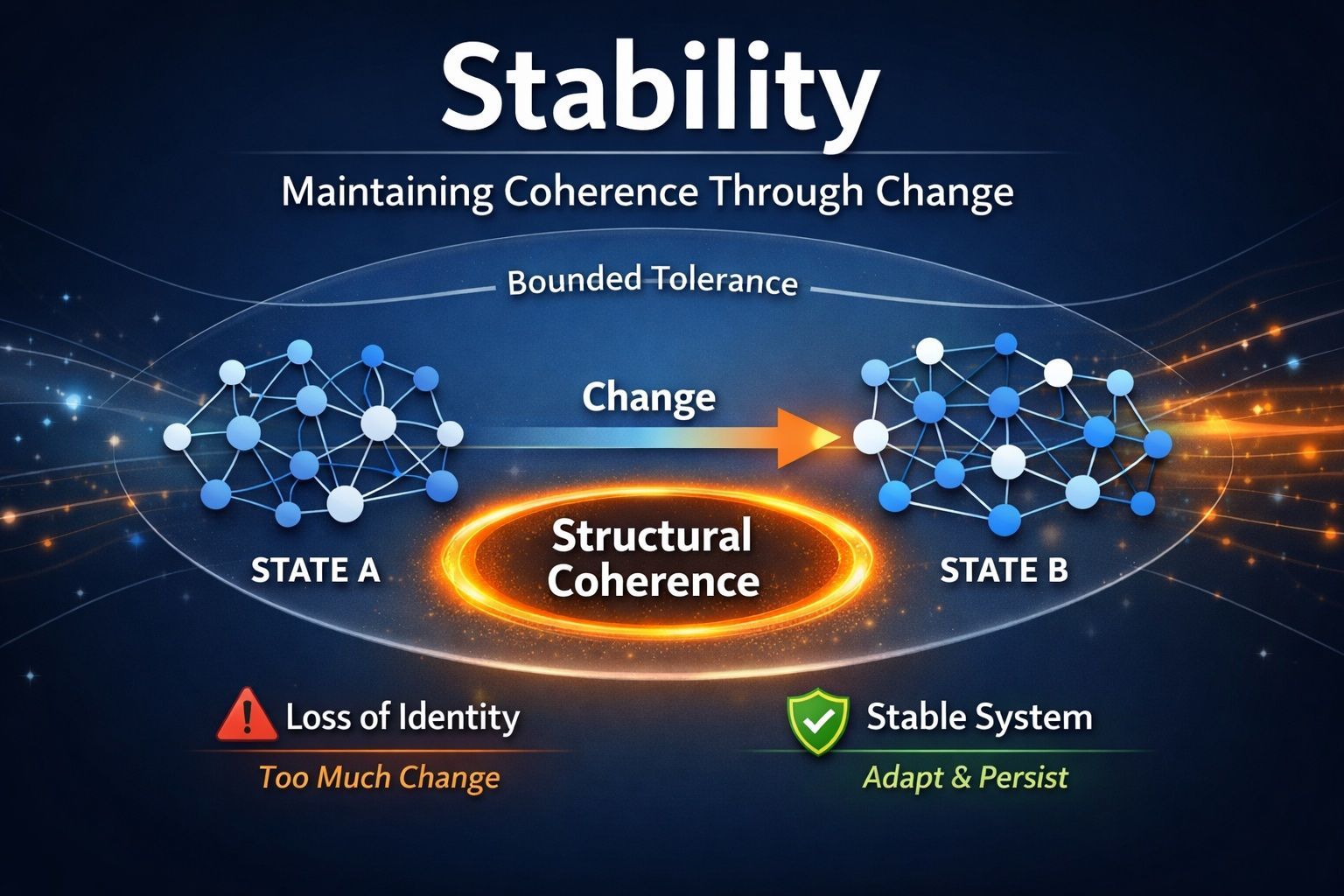
A domain-independent framework defining stability as bounded coherence, explaining how persistent identity and meaning emerge from change.
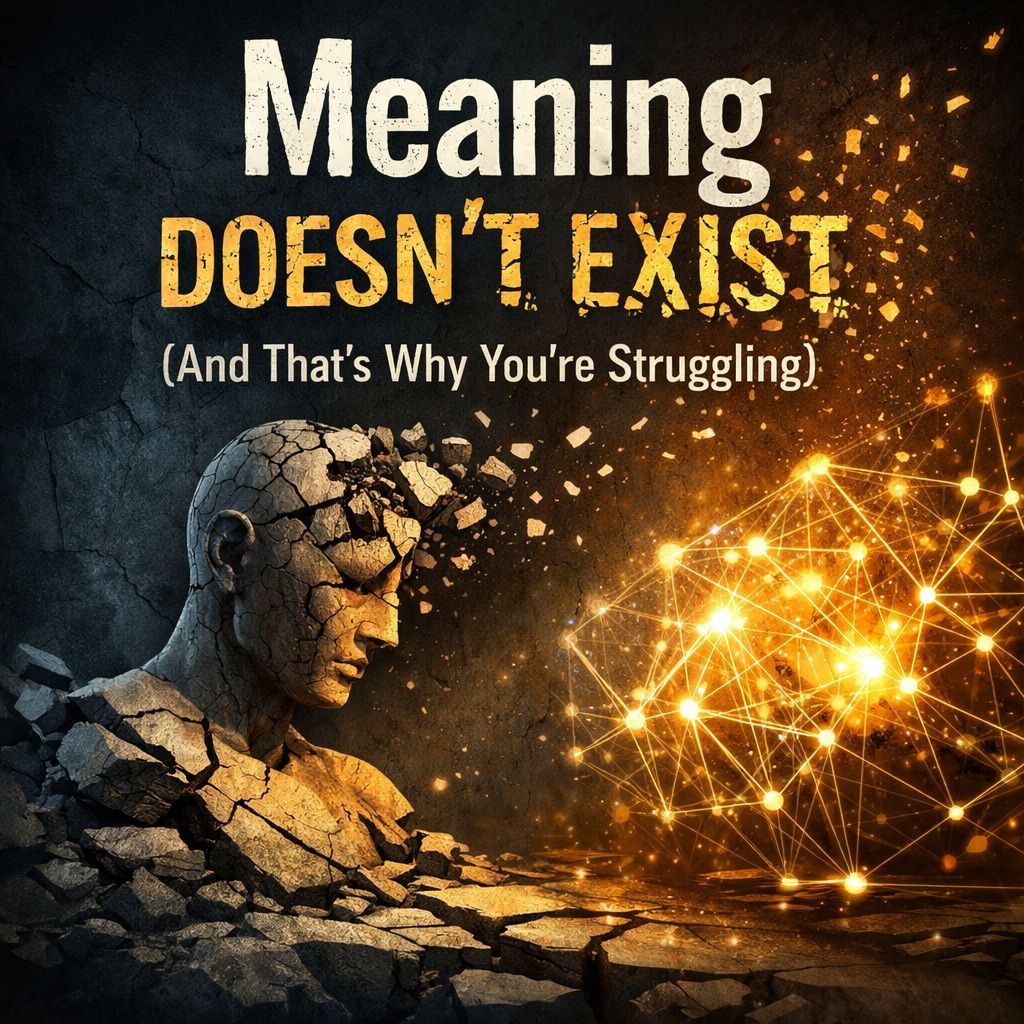
Most people think meaning is something you find. It isn’t. Meaning only appears when your life holds together under change. This article explains why meaning disappears — and how it actually emerges.
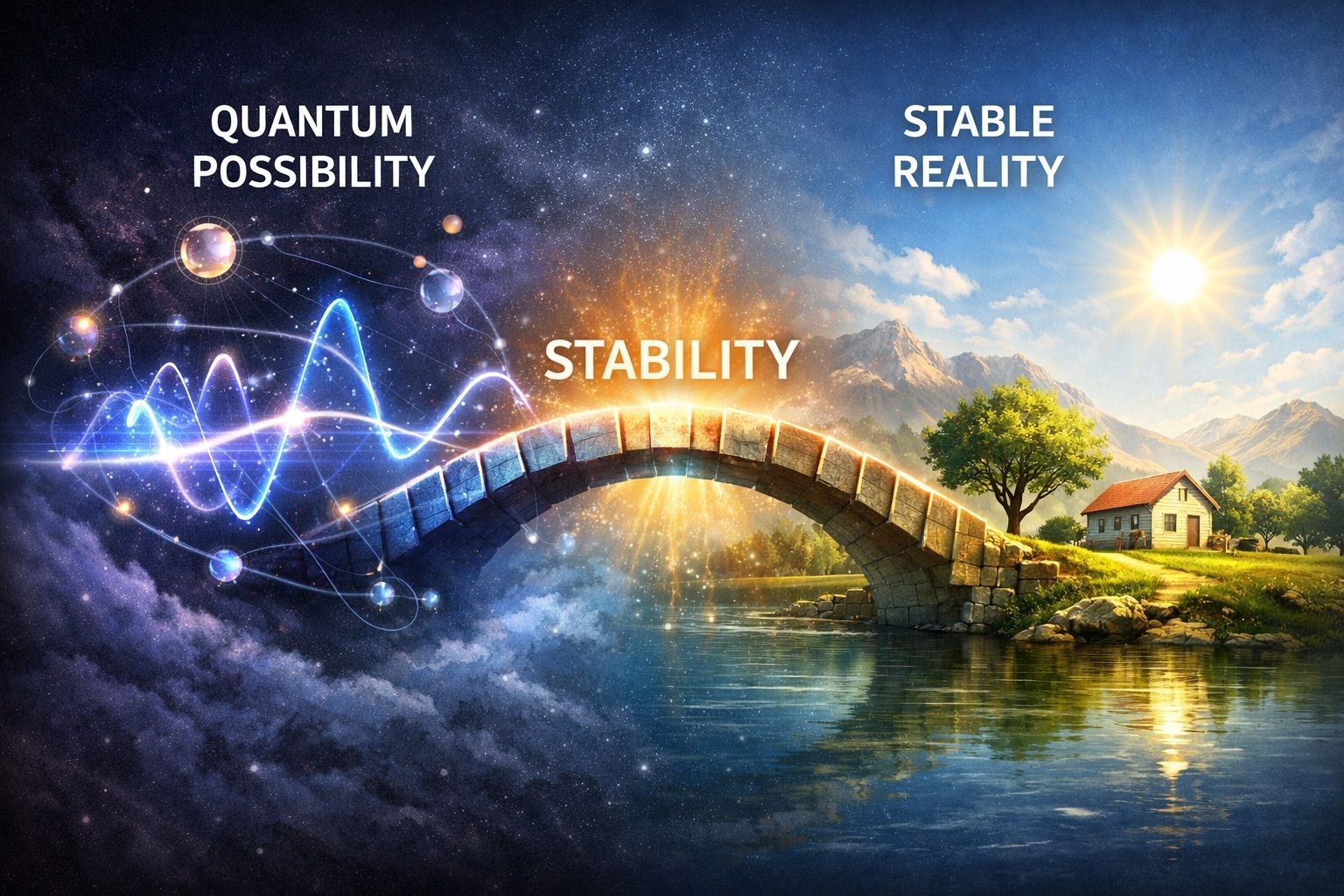
Why Quantum Theory and Reality Never Quite Matched
Scientists built the most precise atomic clock ever. But what are we really measuring: time itself, or simply physical change?
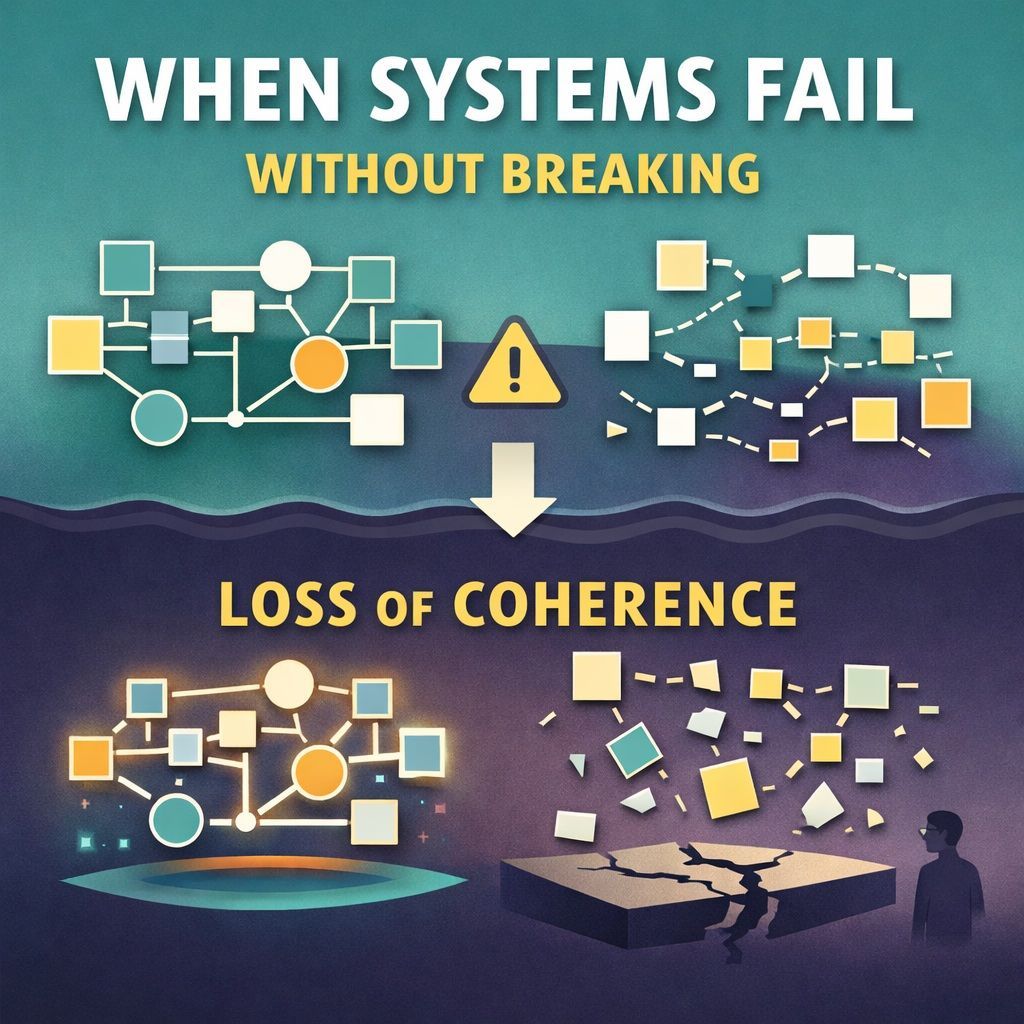
Complex systems often fail without any component breaking. Structural identity theory explains how systems lose coherence while still running.
Meaning does not come from purpose or belief. It appears when identity remains coherent while the world changes around it.
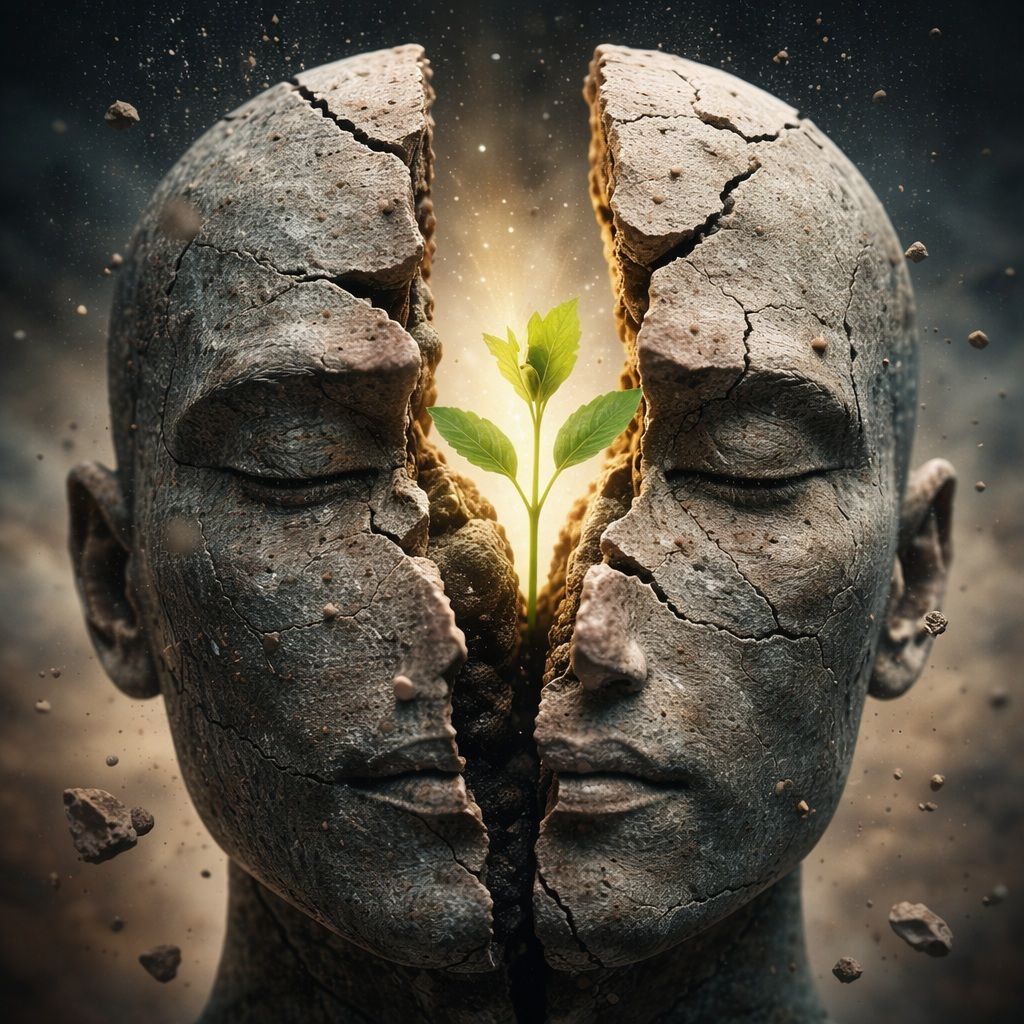
Stability feels strong, but rigid identity becomes fragile. A structural view on resilience, change and preserved coherence.

What allows something to remain the same while it changes? A structural perspective on identity, coherence and resilience.